

Homeowners don’t hire the first contractor they find anymore. They compare, they research, they check reviews, and they often reach out to two or three companies before making a call. That shift has made things harder for home improvement contractors who are still relying on word of mouth and a basic website. This guide walks through what’s actually working in 2026, from getting found locally to turning that visibility into booked jobs and qualified leads that stick around.
Understanding How Homeowners Search Today
The way homeowners search has changed more in the last few years than in the decade before it. People aren’t just typing “roofer near me” anymore, they’re searching with specific problems in mind: “why is my attic so hot in summer” or “cost to replace deck railing.” That’s search intent at work, and it matters because ranking for a broad term doesn’t help much if the person searching isn’t actually ready to hire.
Contractors who win in 2026 are the ones matching their content and ads to where someone actually is in their decision process. Someone researching “types of roofing materials” isn’t ready for a sales call yet. Someone searching “emergency roof repair near me” absolutely is. Treating these searches the same way is a fast way to waste ad spend.
Winning Local Search as a Home Improvement Contractor
The Google Maps Pack
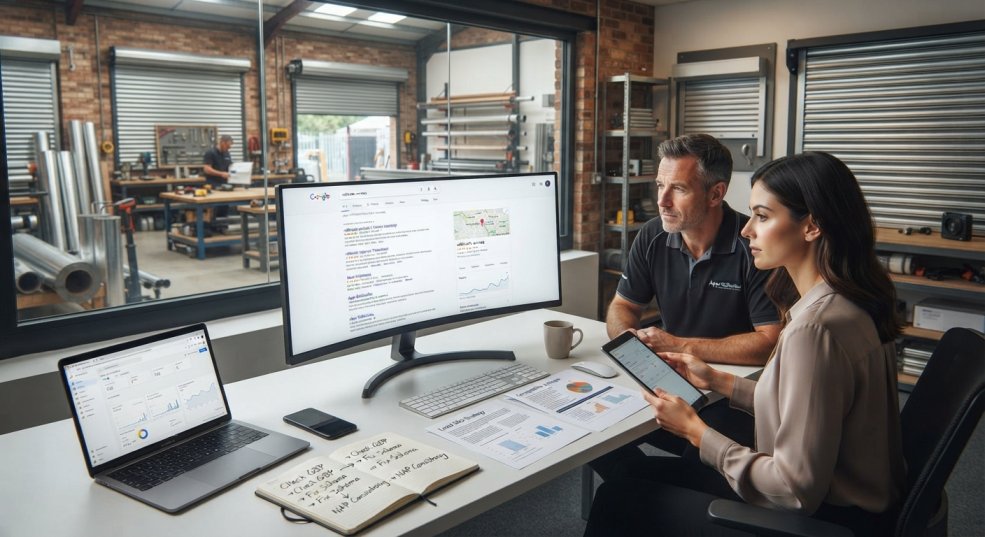
For most home improvement businesses, local search is where the real volume comes from. And within local search, the Google Maps Pack, that block of three business listings that shows up above organic results, gets an outsized share of clicks and calls. Homeowners searching for a contractor tend to click into the map pack before they ever scroll down to organic listings.
Ranking there depends on a mix of factors: proximity, relevance, and how well-optimized and active your Google Business Profile is. Reviews, photos, and regular updates all play a role, but so does something a lot of contractors overlook entirely.
NAP Consistency and Citations
That overlooked factor is NAP consistency, making sure your business name, address, and phone number match exactly across every directory, listing, and citation online. If your phone number is different on Yelp than it is on your website, or your address has a typo on one directory, it sends confusing signals that can quietly hurt your rankings.
Citations, mentions of your business on other sites, whether or not they link back to you, also build credibility in the eyes of search engines. Getting listed accurately on major directories and industry-specific platforms is unglamorous work, but it’s foundational.
Building a Marketing Funnel That Actually Converts
From Awareness to Booked Job
Home improvement purchases aren’t impulse buys. Replacing a roof or adding a sunroom involves real money and real trust, which means your marketing funnel needs more steps than a typical e-commerce funnel. Someone might see an ad, visit your site, read a blog post, check your reviews, and only then fill out a form or call. Each of those touchpoints matters, and skipping straight from “ad click” to “buy now” rarely works for high-ticket sales like these.
Landing Pages That Convert
This is where landing pages come in. A generic homepage trying to serve every visitor usually converts poorly. Dedicated landing pages built around specific services, kitchen remodels, window replacement, exterior shading, whatever your specialty is, tend to perform better because the messaging matches exactly what the visitor searched for.
The most common mistake here is sending paid traffic to a homepage instead of a page built for that specific offer. It’s a small fix that often has an outsized impact on conversion rates.
Proof That Sells: Trust Signals for Contractors
Before-and-After Projects
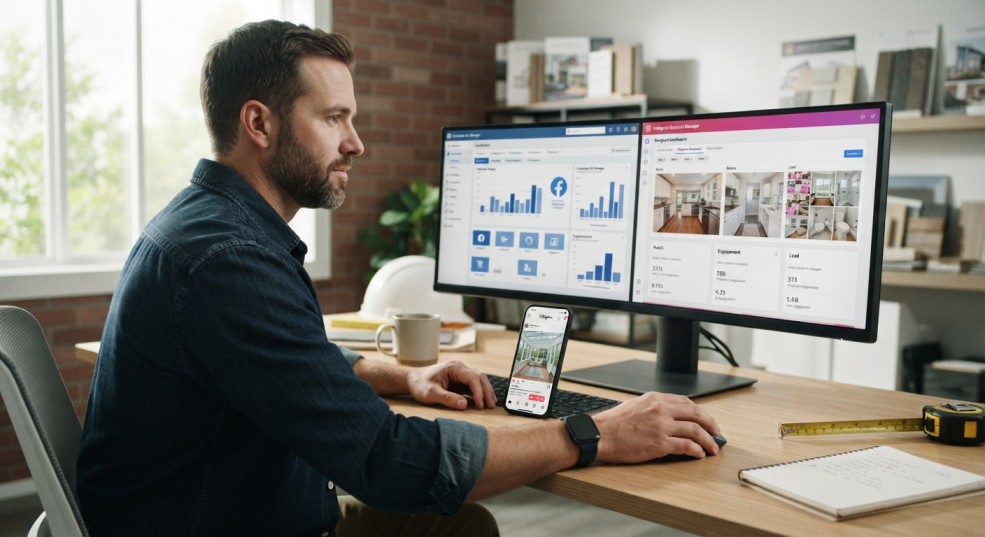
Nothing sells home improvement work quite like seeing it done. Before-and-after projects give homeowners something written copy can’t: visual proof that you can actually deliver results. A strong before-and-after gallery, organized by service type, does a lot of the selling before a prospect ever picks up the phone.
Case Studies
Photos show the result, but case studies explain the story behind it. A good case study walks through the homeowner’s original problem, what was involved in the project, and the outcome, including things like timeline and any challenges that came up along the way. This format works especially well for addressing the objections that stop people from booking: cost concerns, worries about disruption, or uncertainty about how long a project will take.
Other Trust Signals
Beyond visuals and stories, homeowners are also looking for trust signals like licensing, insurance, warranties, and third-party reviews. These don’t need to dominate your marketing, but they should be easy to find, ideally referenced on every service page and landing page.
Seasonal Marketing for Home Improvement Businesses
Demand for home improvement services isn’t flat throughout the year, and treating it like it is leaves opportunity on the table. Seasonal marketing means adjusting your messaging and ad spend to match when people are actually searching. Roofing inquiries often spike after storms. Interest in shading and cooling solutions climbs before summer heat hits. Insulation and window upgrades tend to pick up in the fall as homeowners prepare for winter.
Planning campaigns around these predictable cycles, rather than running the same generic ads year-round, tends to produce noticeably better results for the same budget.
Tracking What Actually Works
Call Tracking
For a lot of home improvement businesses, phone calls are still where deals actually happen, even after all the online research. Call tracking lets you see which campaigns, keywords, or pages are actually generating calls, not just form fills. Without it, you’re often left guessing which parts of your marketing are pulling their weight.
Cost Per Lead (CPL) and ROI
Once you can track where leads come from, the next step is understanding what they cost. Cost per lead varies a lot by channel and service type, and calculating it accurately means factoring in ad spend, tools, and even the time spent managing campaigns. From there, connecting that number to actual ROI, not just lead volume, tells you whether a channel is genuinely worth the investment or just generating activity.
Customer Lifetime Value (CLV)
It’s easy to focus purely on the cost of a single job, but customer lifetime value tells a fuller story. Referrals, repeat projects, and long-term relationships all add value beyond the first sale. Factoring CLV into your numbers often justifies spending more per lead than you’d think, especially for contractors who do good work and stay top of mind for future projects.
The Role of Data and Automation in 2026 Marketing
First-Party Data
As third-party tracking continues to get restricted, first-party data, information you collect directly from your own customers and website visitors, has become more valuable than ever. Something as simple as building an email list from past customers or gathering info through a quote request form gives you a direct line to your audience that doesn’t depend on outside platforms.
AI Automation and Personalized Marketing
AI automation has also become a practical tool for smaller contracting businesses, not just large companies. Automated follow-up sequences, appointment reminders, and lead nurturing emails free up time while keeping prospects engaged. Paired with personalized marketing, tailoring messaging based on what a homeowner searched for or which service page they visited, automation can meaningfully improve conversion rates without adding extra manual work for your team.
Know Your Competition
Competitive Analysis
Understanding what your competitors are doing, their ads, their reviews, their service page structure, isn’t about copying them. It’s about spotting gaps. Maybe none of the top contractors in your area have detailed case studies, or maybe their websites load slowly on mobile. A solid competitive analysis often reveals easy wins that don’t require reinventing your entire strategy.
Building Brand Awareness Beyond Lead Generation
It’s tempting to focus purely on direct response marketing, ads that generate an immediate call or form fill. But brand awareness still matters, especially in a local market where the same handful of contractors keep coming up in conversation. Being consistently visible, through content, reviews, social presence, and community involvement, builds the kind of recognition that pays off even when someone isn’t actively searching yet.
Putting It All Together: A 2026 Digital Marketing Strategy
None of these pieces work particularly well in isolation. Local search visibility gets you found. A solid funnel and strong landing pages convert that visibility into leads. Trust signals push hesitant homeowners toward booking. Tracking tells you what’s actually working, and automation helps you scale without burning out your team.
The contractors seeing real growth in 2026 aren’t necessarily doing anything wildly innovative, they’re just treating marketing as a connected system instead of a handful of disconnected tactics.
FAQs
What’s the most effective marketing channel for home improvement contractors in 2026?
Local search, particularly the Google Maps Pack, tends to drive the most qualified traffic for most contractors, though results vary by service type and market.
How do I lower my cost per lead as a contractor?
Improving landing page relevance, tightening ad targeting around search intent, and building stronger trust signals all tend to lower CPL over time by improving conversion rates.
Why does NAP consistency matter for local SEO?
Inconsistent business information across directories creates confusion for search engines and can hurt local ranking, even if the rest of your SEO is solid.
How can AI automation help a small home improvement business?
Automation handles repetitive tasks like follow-ups and appointment reminders, freeing up time while keeping leads engaged without requiring additional staff.
Bottom Line
Marketing a home improvement business in 2026 comes down to visibility, proof, and tracking, not just running ads and hoping for the best. From local search to call tracking and CLV, the contractors who win are the ones treating marketing as a system. Ready to build yours? Start with a clear digital marketing strategy tailored to your market.